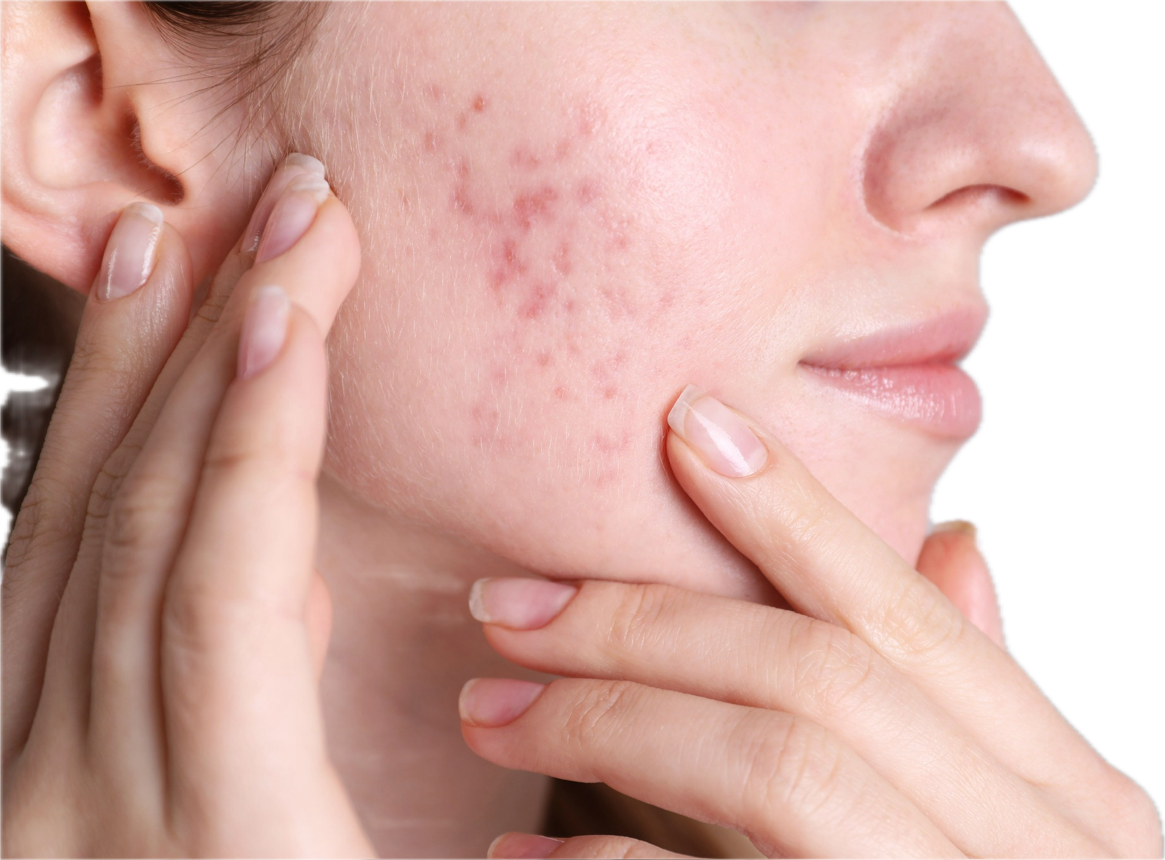
Acne scars are not one problem. In this guide, we break down the most common acne scar types (ice pick, boxcar, rolling, red marks, dark marks), explain which treatment categories tend to match each one, and show how we build a safe, personalized plan for patients in St Johns County, Jacksonville, St Augustine, Nocatee, and surrounding areas.
If you’ve ever leaned into your car mirror in bright sunlight and thought, “Why do my scars look worse in this lighting?” You’re not alone. One of the most common things I hear from patients here in St Johns is that they’ve tried “everything”: peels, serums, facials, even devices at home, and yet the texture still shows up in photos, makeup still catches on uneven spots, and that confidence hit feels unfair, especially when the breakouts are long gone.
Here’s the truth: acne scars are not one problem. They’re a variety of different scar shapes, depths, and color changes. Because they’re different, the “best laser” or treatment is not one single device for everyone. It’s the right tool (or combination of tools) for your scar type, skin tone, and downtime tolerance.
In this guide, I’ll walk you through how to identify the most common acne scar types, which treatment categories tend to match them best, what to realistically expect, and how we approach treatment planning at our clinic, convenient for patients coming from St Johns County, Jacksonville, St Augustine, and nearby Nocatee.
First: Are You Dealing with True Textured Scars, Red Marks, or Dark Marks?
Before we talk treatment options, we have to get the terminology right. Treating the wrong “scar” with the wrong plan leads to wasted time and money, and you may be left feeling unhappy with your outcomes.
True acne scars (texture changes)
These are typically atrophic scars, meaning the skin is pulled downward or depressed. The most practical classification breaks them into ice pick, boxcar, and rolling scars. These are nearly impossible to completely get rid of, but with the right treatment combinations and maintenance, you can get really nice improvement.
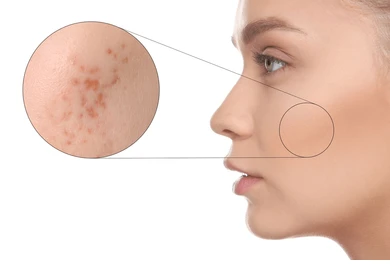
Red marks after acne (Post-Inflammatory Erythema, PIE)
These are flat red or pink marks that can linger after inflammation. They’re not true texture scars, but they can be just as frustrating. These are fed by tiny microvessels and are often much easier to treat than actual texture scars.
Brown or dark marks after acne (Post-Inflammatory Hyperpigmentation, PIH)
These are flat darker spots that remain after a breakout heals, more common and more persistent in medium-to-deeper skin tones.
Why this matters
- Texture scars often need collagen remodeling (resurfacing and collagen induction).
- Redness often responds to vascular-targeting energy.
- Dark marks need pigment-safe strategies and careful settings to avoid worsening discoloration.
If someone is prone to PIH, doing anything that can cause more inflammation, like a strong laser treatment or microneedling session, can theoretically lead to more PIH if not planned carefully.
How Laser and Energy Treatments Improve Acne Scars
Most acne scar treatments, such as lasers and RF microneedling, work by creating controlled micro-injuries (or controlled heating) to trigger collagen remodeling and smoother texture over time. In other words, a controlled injury is created, which stimulates your skin’s natural wound-healing process. Part of that process is collagen stimulation.
The key concept: fractional treatment
Many modern resurfacing technologies are fractional, meaning they treat tiny columns or zones of skin while leaving surrounding areas intact. That helps with healing and downtime compared to fully ablative resurfacing. Think of a grid pattern with tiny dots. Where those dots are is where the zone of injury occurs.
Why combination therapy is common and often most effective
If your acne scarring includes multiple types like redness, ice pick scars, dark marks, and boxcar scars (most people do), it’s usually best to use a combination regimen with different modalities that target different depths, different “targets” (pigment vs texture), and different downtime levels.
Best Laser (and Device Category) for Each Type of Acne Scar
Let’s map the most common scar concerns to the categories that most often help.
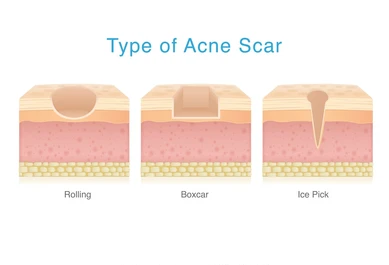
Ice pick scars
What you see: small, deep, narrow, “punched” looking pits.
What tends to help most:
- Ablative fractional resurfacing (commonly CO2 or Er:YAG categories) can remodel deeper scar architecture by driving collagen repair.
- TCA CROSS involves precise application of high-dose trichloroacetic acid (70 to 100%) directly into the base of individual scars.
- RF microneedling combines microscopic needle channels with radiofrequency heat delivery to soften, tighten, and smooth scar appearance.
- Medical-grade skincare and sun protection are a must.
Important realities:
- Ice pick scars rarely “vanish.” The goal is softening, smoothing, and blending.
- Downtime can range from minimal to significant depending on settings, depth, and treatment.
- Multiple sessions are typically needed.
Boxcar scars (sharp-edged depressions)
What you see: wider U-shaped or box-like indentations.
What tends to help most:
- Fractional resurfacing and hybrid fractional resurfacing for texture and tone improvement.
- HALO® Laser Resurfacing is referenced by SJAWC as addressing acne scars, texture, tone, and related concerns, making it a natural anchor treatment in our practice when clinically appropriate.
- Microneedling and/or RF microneedling.
- Chemical peels.
- Medical-grade skincare and sun protection.
If you’re exploring resurfacing options, start here: https://sjawc.com/laser-resurfacing
Why boxcar scars can respond well: their width and shape often make them good candidates for controlled resurfacing that encourages edges to soften and blend.
Rolling scars (wavy texture and tethering)
What you see: uneven, wave-like texture, often worse with side lighting.
Rolling scars are frequently tethered, meaning strands under the skin pull downward (similar to cellulite dimpling). In those cases, resurfacing alone may not fully release the pull. You often need to release the fibrous band.
What tends to help most:
- Subcision is a gold standard for tethered rolling scars. A small needle is inserted under the scar to release or cut the fibrous band.
- Collagen-stimulating approaches (including microneedling-based strategies) combined with resurfacing when appropriate for your skin type.
- Combination therapy often yields the best results.
- Medical-grade skincare and sun protection.
Learn more about microneedling options here: https://sjawc.com/micro-needling
A safety note on RF microneedling
RF microneedling is widely used for texture and scarring, but it’s essential to treat it like the medical procedure it is. In October 2025, the FDA issued a safety communication noting reports of serious complications (including burns, scarring, fat loss, disfigurement, and nerve damage) and emphasized the importance of receiving care from a licensed, trained provider. Read the FDA safety communication here: https://www.fda.gov/medical-devices/safety-communications/potential-risks-certain-uses-radiofrequency-rf-microneedling-fda-safety-communication
These treatments should not be something you price shop. There are real risks associated with all of the options discussed here. Please ensure you are being treated by a trained medical provider. Check reviews, certifications, and years of experience. At SJAWC, we focus on the right treatment for the right patient, safe and effective sessions, education, training, and results. Safety is number one.
Red acne marks (post-acne redness, PIE)
What you see: flat red or pink marks where acne used to be.
What tends to help most:
- Vascular lasers (often pulsed dye laser categories) are commonly used for redness patterns.
- IPL and BBL-type treatments can be used for redness in appropriate candidates (selection matters).
- Medical-grade skincare and sun protection.
Dark marks (post-inflammatory hyperpigmentation, PIH)
What you see: flat brown spots or patches that linger.
What tends to help most:
- Pigment-safe strategies can include gentler resurfacing and microneedling.
- Medical-grade skincare, including brightening support. Explore skincare support here: https://sjawc.com/skin-care
Raised scars (hypertrophic scars) or thicker scars
Raised scars behave differently than depressed acne scars.
- Vascular energy can help some red, raised scars in certain contexts.
- Some thick scars may require additional medical management beyond lasers alone, such as surgical removal or steroid injections.
How We Build an Acne-Scar Plan at SJAWC
When someone books a consult with us, we’re looking at four practical variables:
1) Scar type mix (almost always more than one)
Most patients have a blend of rolling and boxcar scars plus color changes. A one-size-fits-all recommendation usually misses the mark.
2) Skin tone and pigment risk
Your Fitzpatrick skin type (light to dark) affects how aggressively we can treat and how we prepare the skin beforehand. Darker skin types have a higher risk for complications, so treat with an established provider experienced with deeper skin tones and pigment-safe devices.
3) Downtime tolerance
Some patients can plan around a few days of redness and texture changes. Others need conservative downtime. Generally, stronger treatments mean more downtime, but they may also produce faster improvement when appropriate.
4) Active acne control
If acne is still active, we often prioritize stabilizing breakouts first. Otherwise, you can create new marks while trying to fix old ones.
If you’re ready to talk through options, our clinic is located in the Forums on CR210, in St Johns County, convenient to St Augustine, Jacksonville, and minutes from Nocatee. Reach us here: https://sjawc.com/contact-us
What Results Are Realistic (and How Long It Takes)
Laser and other modality treatments can significantly reduce the appearance of acne scars, but complete removal is uncommon. Be wary of practices promising complete removal.
Your improvement depends on:
- Scar depth and type
- Skin tone and your body’s healing response
- The combination of modalities used and the skill of the provider using those tools
- How consistent you are with pre and post care and sun protection
Why do results take so long?
Many patients notice improvement after one session, but like going to the gym, one workout is just the beginning. Think of these treatments like planting collagen seeds. It takes time for those seeds to grow, and they do better when you nourish the soil (your skin and your body).
Peak results for many treatments can be appreciated around 6 to 10 weeks, but improvement can continue for months as your skin continues producing collagen. What you see one week after treatment is not your final result.
How to Prepare (and Heal) for the Best Outcome
If you have chosen a practice you feel comfortable with, most will send detailed pre and post guidelines to help you prepare, heal, and maintain results. Take time to read them and reach out with questions before your treatment day.
Before treatment
- Avoid tanning and unprotected sun exposure.
- Be transparent about medications, history of cold sores, and prior isotretinoin (Accutane) use.
- Follow a clinician-directed skincare plan leading up to treatment, especially for darker skin types.
- Come well hydrated. Many treatments target water in the skin, and hydration can improve response.
After treatment
- Commit to sun protection and gentle healing care.
- Follow the post-care instructions from your provider.
- Don’t pick or scrub healing skin, even if it feels rough like sandpaper.
- Keep expectations realistic. Collagen remodeling is a process.
- Communicate any concerns or questions to your provider.
If you’ve been tempted by discount laser offers, please hear me clearly: acne scar treatment is not a Groupon type treatment. Settings, depth, technique, device choice, patient selection, and provider skill matter. Your skin is not the place for shortcuts. You would not shop for the cheapest deal for heart surgery or a knee replacement. Same thing here. Be safe. Be smart. Choose wisely.
Ready for a personalized acne scar plan in St Johns?
If you’d like a personalized plan for acne scar laser treatment in St Johns, I’d love to meet you and evaluate your skin in person.
- Schedule a consultation: https://sjawc.com/contact-us
- Mention this blog post.
- Call us: (904) 710-0453
FAQ
1) What is the best laser for acne scars?
There isn’t one universal “best.” The best laser depends on whether you have ice pick, boxcar, or rolling scars (texture) versus red or dark marks (color). A consultation helps match the right approach to your scar type and skin tone.
2) Does HALO® help acne scars?
SJAWC lists HALO as addressing acne scars, texture, tone, and related concerns. Whether it’s the right choice for you depends on scar depth, skin type, and downtime tolerance.
3) How many sessions do I need?
It depends on scar severity and treatment intensity. Many patients plan for a series to build improvement while supporting healthy collagen remodeling.
4) Can lasers remove acne scars completely?
Lasers often significantly improve the look of scars, but complete removal is uncommon. The goal is smoother texture, more even tone, and better overall blending.
5) What’s the difference between red marks and scars?
Red marks (PIE) are color changes from inflammation. Scars are structural texture changes in the skin. They often need different treatment categories (vascular versus resurfacing).
6) Is RF microneedling safe for acne scars?
Yes, it can be a safe and effective option for many types of scars when performed by a trained, licensed provider using appropriate settings. RF microneedling is generally stronger than regular microneedling, so provider skill, patient selection, and aftercare matter.
7) I live near Nocatee or Ponte Vedra. Do I need to travel far for treatment?
No. Our St Johns location is convenient for patients coming from Nocatee and the surrounding St Johns County area, as well as Jacksonville and St Augustine. We are right off I-95 on CR210.